Blog

How to Keep Drivers From Backing Out

Hiring qualified truck drivers is hard! That is no secret. Writing enticing job posts, getting drivers to apply, going through the interview process, offering the position, and putting the driver through orientation is a long and expensive process.

The average cost to hire a new driver is $8,612. As a recruiter, nothing is more deflating than going through 95% of the process only to have the driver bail. Unfortunately, this occurs far too often.  A survey conducted by Robert Half staffing agency shows that 28% of people admit to backing out of a job offer after accepting it. Here is how to keep drivers from backing out before orientation.

Offer Competitive Benefits, and Shout Them From the Rooftops

Many truckers feel that they are underpaid, overworked, and treated with little respect. This feeling is one of the driving forces behind the high turnover rate. If your company is offering benefits that are on the low side then drivers are likely to back out.

The Robert Half survey mentioned earlier found that of all the employees who backed out of an offered position, 44% of them did so because they received a better offer from another employer. Offering competitive benefits is only part of the equation.

As the recruiter it is up to you to make the benefits of the position abundantly clear. Handing the applicant paperwork that lays out the benefits is not enough. Repeatedly through the hiring process you need to highlight the benefits offered.

Get the applicant excited about the opportunity. If you do not ingrain the company’s benefits into the applicant’s mind you are leaving the door cracked for another company to use their benefits to lure the applicant away.

Slow Onboarding Speeds Increase Frustration 

A slow onboarding process can be frustrating for new hires. Being hired by a company  is an exciting moment for drivers. Either this is the driver’s first driving job, it is a second chance, or they are being hired for a position that better aligns with their personal needs.

However, a painstaking onboarding process can kill that excitement the driver felt when initially hired. Difficult paperwork, manually submitting documents, figuring out how to get to orientation, delayed drug tests, etc. are all headache inducing actions.

In addition to increasing the levels of frustration, a prolonged onboarding process increases the amount of time other companies have to lure your hire away from you. High levels of frustration combined with an extended amount of time for competition to poach your applicants is a recipe for disaster.

Tenstreet has some excellent tools for increasing the speed of your onboarding process.

frustrated driver on the verge of backing out of their new job

Personally Call Your Applicants at Each Step

In the past, we have written about the importance of calling leads immediately after they apply. Phoning does not lose its importance as the hiring process goes on. In fact, phoning becomes more important. You must be calling your applicants as much as you can.

By calling the driver you will establish a personal relationship with them. Drivers are less likely to back out on a job offer, even if presented with a better option, if they have a relationship with the recruiter. Applicants will feel loyal to you if you take the time and effort to build a relationship with them.

As a truck driver recruiter dealing with applicants backing out of a position is part of the job. That does not make it any less frustrating. By taking a few extra steps, you can keep drivers from backing out before orientation. Make sure the driver knows the company benefits, speed up your onboarding process, and build a personal relationship by calling the driver frequently.

Building Trust Into the Truck Driver Recruitment Process

It is no secret that there is a growing disconnect between drivers and recruiters. The feeling that recruiters will say anything to get drivers into seats is growing amidst drivers. You need to work on building trust into the truck driver recruitment process. When asked about their skepticism of recruiters a driver said,

“Because recruiters are in sales… they’re selling their employer’s driving positions to you…”

So the question stands, how do recruiters establish trust with applicants?


Self Reflect, Where is the Miscommunication Coming From?

Cartoon between cat and dog depicts business miscommunication

Recruiters that we have spoken to about mistrust claim that they do not intentionally lie to drivers. They say that miscommunications occur when the carriers pass information intended for the applicants through the recruiters. Similar to the game telephone.

A recruiter I spoke with on the topic said,

“Most of the ‘lying’ is actually miscommunication. Trucking has a lot of moving parts in real time and things change constantly and instantly.”

In order to buck this trend you must analyze your current flow of information and identify points where miscommunication can occur. Identifying these points will enable you to attack them head on.

Deploy Radical Transparency Through the Entire Recruitment Process

Ray Dalio popularized the term ‘radical transparency’ in his book Principles. In layman’s terms, ‘radical transparency’ is being transparent in every step of the process. This will improve overall efficiency and effectiveness.

Throughout the recruitment process, you need to be radically transparent at each step. Inform the applicant about the possible areas of miscommunication. This may seem counterproductive; however, doing so will lay the foundation for trust that a mutually beneficial relationship can be built on.

By laying this foundation of trust, we can then begin to build the type of relationship that will make the driver want to stay with the company. While reflecting on all the times they had been recruited a driver said,

“The only recruiter that was truthful with me was the one for the company I’m with now.”

In the case of this driver, all it took for the recruiter to earn the driver’s loyalty was for the recruiter to deploy radical transparency.

Go out of Your way to Initiate Communication

As the recruiter, it is up to you to communicate with the applicant where you are at each step of the hiring process. Never assume that the applicant has no questions or concerns simply because they have not directly asked you. By repeatedly reaching out to the applicant and providing them with updates and asking if they have any questions you are establishing yourself (and vicariously your company) as a trustworthy source. Frequently initiating communication with the applicant will build a stronger relationship and ensure that all parties are on the same page.

Make the Every Element of the Process Personalized for the Driver

Even in an industry where turnover rate hovers around 100%, switching employers is a big decision for drivers. In the initial interview with the driver, it is up to the recruiter to find out what is motivating them to switch carriers. Is it money? Is it home time? Does the driver’s current company not value its drivers?

By figuring out the driving force behind the driver’s desire to switch companies you are able to accurately assess if the position you are filling is a good fit for the driver. If the position is a good fit then you are able to solve the applicant’s biggest employment pains by hiring them.

Use this to your advantage. Inform the applicant that your position will alleviate the problems they are experiencing. Solving the driver’s biggest employment pains will earn their trust for as long as you were honest with them throughout the recruitment process.

Trust is an essential element to truck driver recruiting. Unfortunately the level of trust drivers have in recruiters is deteriorating, so you must actively work to earn that trust. Building trust into the truck driver recruitment process will help you earn the loyalty of drivers hired. Analyze your hiring process to minimize miscommunications, deploy radical transparency, initiate communication, and personalize the process in order to build trust into the truck driver recruitment process.

How to Strategize for Successful Driver Recruitment

Prior to launching a new campaign do you layout the terms of success? Or do you gauge success solely on number of drivers hired? If it is the latter then you may want to change your strategy. In order to improve the overall recruiting efforts of your company, it is crucial that each recruitment campaign has its own terms of success. Here is a guide to help you strategize for successful driver recruitment.

Your Company’s Values are the Base of all Decisions

Before you do anything, you need to know what your company’s values are. Does your company pride itself on hiring the best talent and a high retention rate? If so your recruitment efforts should prioritize quality over quantity. Or maybe your company is determined to be the most tech-savvy trucking company.

In this scenario your campaigns should revolve around utilizing new tech, such as geofencing, to hire drivers. Every company has its own unique set of values. It is up to the recruiter to use these values to guide each strategic decision they make.

Set Recruiting Goals That Align With Company Values

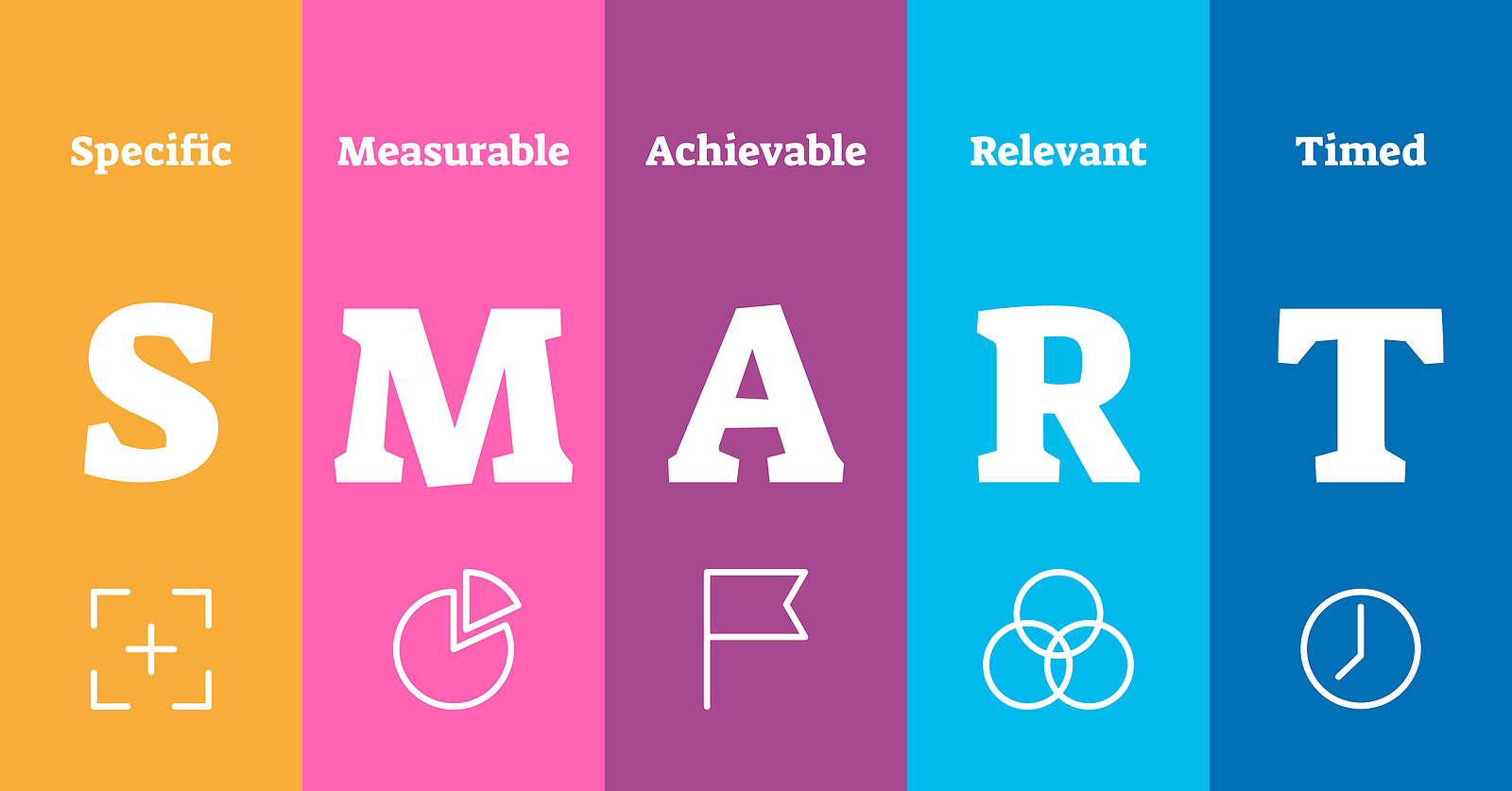
Once you have defined your values, you need to use them to set SMART (Specific, Measurable, Achievable, Relevant, Time-based) goals for your campaign. Vague goals such as “hire as many drivers as possible” or “increase the number of hires found on Facebook” are not effective.

If you are working for a company that values family than an example of a SMART goal for your campaign may be, “Hire five married team drivers from employee referrals by the end of the month”. Combining your company’s values with the SMART technique you are able to write goals that motivates your staff and gives your efforts a stronger sense of purpose.

Also, by using clearly defined goals it is much easier to tell if you achieved your goal or not. “Hire as many drivers as possible” is an impossible target to hit; however, “hire five married team drivers from employee referrals by the end of the month” gives you a number to hit, using a certain technique, within a time frame.

SMART goals graphic

Analyze Data Directly Related to Your Recruitment Efforts

As a general rule of thumb the more data you can collect the better. However, if you are focusing on the wrong numbers then your insights will be mislead.

Uncle Ben’s advice from Spiderman, “With great power comes great responsibility,” holds true with data. With great amount of data, comes a greater emphasis to focus on the right data.

For example, a company that sets out to hire more female drivers from Facebook will be mislead if they looked at the data on total number of driver applicants from Facebook. The company may falsely claim their campaign was a success because the total number of Facebook applicants went up but female applicants did not increase.

DiscoverORG did a study in 2015 and found that the average marketing/sales department lost 550 hours and $32,000 per sales rep from using bad data. When question the data set you are looking at it is helpful to ask yourself, “Does this data directly relate to the company values?” and, “Does this data directly show I am short or exceeding my goal?”

If the answer to either of those questions is “no” or you are unsure, it is best to not use the data and focus on the data you can confidently answer “yes” to both of the questions.

Focus on Achieving Your Recruitment Goals

The goal you defined prior to launching your campaign should be your only barometer for success. It is easy to focus too much on following the “process” to achieve our goals. In Jeff Bezo’s 2016 Letter to Shareholders he said,

“The process becomes the proxy for the result you want. You stop looking at outcomes and just make sure you’re doing the process right. Gulp.”

You may have a goal of hiring 10 drivers via referral for the month. If you come up short, instead of claiming you had a good process and will do better next month, take the opportunity to assess your process and find areas to improve.

Learn From Mistakes and Apply That to Future Recruiting

Every recruitment campaign you launch is a learning opportunity. As the recruiter it is up to you to document the entire process and learn lessons based on what happens. You must use the lessons you learned from previous campaigns to avoid repeating mistakes and improve overall effectiveness of future campaigns.

Having a plan for achieving success is equally as important as having an effective recruitment plan. Defining you values, setting clear goals, avoiding bad data, focusing on outcomes, and learning from previous campaigns are all steps for achieving success. Even the most well thought out recruitment campaigns need  to strategize for successful driver recruitment.

The Importance of Mobile-First Recruitment

Truck driver recruitment is changing before our very eyes. In today’s trucking world drivers are checking job opportunities 24/7. Smartphone technology is the driving force behind this shift in trucking recruitment. This shift is causing recruiters to focus on the importance of mobile-first recruitment.

Mobile-first recruitment is the practice of combining mobile advertising and optimizing your website for mobile performance.

Mobile Devices are Taking Over Trucking

As a whole, the trucking industry is rapidly becoming more reliant on mobile devices. Both truckers and carriers believe mobile devices are a necessity in the industry.

In 2017, half of all drivers utilized their mobile device to communicate with dispatch. Gfk Public Communications conducted a study that found 61% of drivers would choose to own a smartphone if they were forced to pick between their phone and their computer. 92% of recruiters believe that a seamless mobile application process is mandatory.

It is evident that every aspect of the industry is shifting towards being reliant on mobile devices, but the question is why?

Carriers are deploying mobile devices in their trucks and having drivers download certain apps because of the real-time data they receive from these devices. In addition to drivers being easier to contact, the companies can track the drivers and measure their efficiency.

Also, training drivers to use mobile devices can save the company money. Mobile devices help drivers avoid driving through storms, traffic jams, etc.

Truck driver finds a new job on their mobile device

Mobile Devices Increase Efficiency for Carriers

Truckers are able to use mobile devices to help them professionally and personally.

OTR drivers are on the road, away from loved ones, for weeks at a time. Mobile devices make it possible for drivers to stay in touch with their friends and family when they are on the road.

In addition to being connected with the people they care about, truckers can download apps that help them with trip planning, finding truck stops, logbook functions, and much more.

Mobile devices keep truckers connected and make their jobs less stressful.

Recruiters rely on mobile devices because drivers are heavily using their mobile devices. Certain technologies (geofencing, social media, etc.) enable the recruiter to send recruitment ads to the mobile devices of specific demographics. Utilizing mobile first strategy allows recruiters to recruit the exact kind of driver they are looking for at a cost effective price.

Mobile First Strategies Improve Business

FleetOwner wrote a story on how U.S. Express improved its business simply by increasing the performance of their mobile site. Using Google’s Accelerated Mobile Pages (AMP), U.S. Express optimized its recruitment site’s mobile performance.

AMP increased the load speed for U.S. Express’ site by five times and increased job applications by 62%.

By increasing their mobile site’s performance, U.S. Express expects to save $1 million annually. They can use that to improve other aspects of their business.

U.S. Express simply improved their site’s mobile performance, had they paired that with a mobile based campaign they would have seen even greater results.

In 2019, 67% of drivers used their smartphones to look for new employment opportunities. By combining a mobile campaign with a site optimized for mobile performance, your company will place itself in front of drivers seeking a new position. Then enable them to seamlessly apply for your position.

As time goes on each aspect of trucking becomes more reliant on mobile technology. Carriers becoming more reliant on mobile technology will force their drivers to use their mobile devices more frequently. Drivers being on their mobile devices more frequently will cause them to look for better employment opportunities more often. It is a positive feedback loop.

Now, recruiters must capitalize on this trend by running recruitment campaigns built for mobile devices and have recruitment sites that are optimized to be used by a mobile device. Using a mobile-first recruitment strategy will increase the amount of applicants your company receives and improve your business.

Want help executing a mobile focused recruitment strategy? Call Drive Trucking today at (801) 204-5499!

Seasonality of Truck Driver Recruitment

There are four distinct seasons to the trucking season. The seasons in order are: slow season, produce season, peak season, and finally the holiday season. Knowing the seasonality of trucking provides key insights to understanding the seasonality of truck driver recruitment.

Season 1 Peak Recruitment Season

It is of the utmost importance that recruiters are allocating the majority of their efforts to bring in as many new hires as possible between January 1st – March 31st.

As of 2017 the average time to hire (in work days) for the transportation industry was 24.9 days. Knowing that the produce and peak seasons are around the corner, recruiters need to put their company in the best position possible to capitalize on these busy seasons.

If a recruiter slows down their efforts because it is the “slow season” for drivers then they are positioning their company to scramble through produce and peak season.

During the busy seasons every trucking company in the country will scramble to fill all of their trucks. The companies that utilized their time during the slow season will be the ones to successfully fill their trucks.

Season 2 Season of Shifting Gears

By the time April hits you should have the majority of your fleet filled. Due to things like the high turnover rate and challenges associated with finding qualified drivers, it is more than likely that you still have some trucks to fill. That is okay.

If you treated season one as the peak recruitment season then your company will be well equipped to tackle produce season.

Filling the fleet needs to remain your top priority. However, during this time it is important for you to begin allocating some time to driver retention. Competing trucking companies will start to realize that they are short drivers for the upcoming seasons and ferociously recruit.

As the pool of qualified shrinks your competition will look to poach your drivers.

Studies have shown that 70% of the global workforce are passive candidates. You need to begin retention efforts during season 2. If you don’t a large portion of your drivers will leave your for another one.

I recommend starting off this season focusing on recruitment, but then as each week passes by focus more on retention. Do this until you reach the point where your top priority is retaining your drivers.

Gear shifter of a semi-truck symbolizes season of shifting gears

Season 3 Retain, Retain, Retain Season

August through October is the most stressful time of year for drivers. At times it is going to feel like there is more units that need to be delivered than you have the capacity for.

That is okay, at this point you have worked your hardest to fill your fleet with qualified drivers and now your main focus needs to be retaining your talent.

Trucking companies that failed to properly recruit earlier in the year will now be desperate for drivers and will be allocating large amounts of resources to recruitment. You need to be prepared for the fact that your drivers are going to be tempted to join other companies.

If you do nothing to entice them to stay with you then the drivers will leave for another company. Here are some tips for driver retention:

  • Instead of paying per mile offer an hourly wage so drivers are paid for everything they do, like loading and unloading.
  • Offer significant performance bonuses during the peak months.
  • Make the drivers feel valued by having a company wide “Driver Celebration” day
  • Show you care about the drivers’ families by offering additional time off during the holiday season based on performance during the peak season.

It is important to note that despite your best retention efforts there will be drivers that leave the company. Make sure that you are still allocating about 20% of your time for recruiting new drivers during the retention season.

Season 4 Sourcing Season

Once Thanksgiving passes the industry slows down as people begin to take time off to celebrate the holidays with their loved ones.

Drivers are going to be more focused on their time off than finding a new job. You will be spending less time calling, meeting and interviewing candidates.

This downtime is an excellent opportunity for you to source prospects and build up your hiring pipeline. Find new groups to join on social media, iron out the details for a new referral program, and build out your contact list as much as possible.

The better job you do sourcing during Season 4, the more success you will have during the following year’s Peak Recruitment season. As mentioned above, a successful Season 1 is critical to a successful year.

Improving Driver Recruitment With a Faster Response Time

Digital marketing tools like geofencing, social media, SEO, etc. have enabled trucking companies to generate more applicants than ever before. However, the most important step in executing a successful campaign relies on technology that has existed since 1876, phoning. The rate at which recruiters are able to contact driver applicants has a direct correlation with improving your driver recruitment.

Slow Response Times Kill Your Recruitment Efforts

Forbes conducted a study of 10,000 businesses across multiple professions to see how effective they were at contacting internet leads and measure the results of contacting the leads.

On average it took businesses 46 hours and 53 minutes to pick up the phone to call a lead. Sales reps only attempted to get a hold of the lead 1.3 times before moving on. The study found that 71% of the leads generated were being wasted due to the slow response time.

One study conducted by Dr. James Oldroyd found some eye opening results:

  • The odds of contacting a lead are 100 times higher if called in 5 minutes versus 30 minutes.
  • The odds of qualifying a lead are 21 times higher if called in 5 minutes versus 30 minutes.

The moment a driver submits an application to drive for your company, a recruiter needs to be calling them. Every second that ticks by where a recruiter has not called the applicant the odds of hiring that driver diminish.

How A Quick Response Time Will Improve Campaigns

Think back to two days ago and I bet that you will struggle to remember everything that you did that day, let alone all the websites you visited. Drivers are the exact same way.

If your recruiters are taking the average amount of time (46 hours and 53 minutes) to call driver applicants, then chances are the applicant has forgotten about your company.

The applicant may remember applying for the position. However, they will have forgotten the information that made them want to apply.

By calling immediately after application the driver will still have all of your information fresh on their mind.

Also, a quick response time generates a “Wow Effect” with applicants. Place yourself in the driver’s shoes for a moment. You have applied to five trucking companies that are all claiming to value their drivers and take care of them more than the competition.

Four of the five companies take two days to call you about your application. One company called you within five minutes of submitting the application. Which company would you feel like wants you the most?

Applicants that receive a call immediately after submitting their application exhibit an emotional response. That emotional response creates a feeling like, “this is a company that truly wants me to be a part of their team.”

Tips for Decreasing Your Response Time

Hand starts stop watch to measure response time

Now that it has been proven how critical a fast response time is, you are now probably wanting to place a response system within your company to improve your response time. Here are some tips to help you:

  • Track your team’s response time: If you are not already tracking your response time then you must begin. This will give you a baseline to work from and enable you to prove you have made improvements to your response time.
  • Set goals: The ultimate goal for your team should be to respond in under five minutes of an application being submitted. However, if your response time is two days then it is unrealistic to expect your team to begin responding within five minutes. Start by trying to get the average response time down to one day, then twelve hours. Slowly work your way down to five minutes and then let your team know that five minutes is the expectation going forward.
  • Automation: Using a tool like Callingly to automate the response process is a sure way to improve response time. Callingly integrates with your website and will call your team as soon as a new lead comes in, routing the lead based on territory and schedule.

A fast response time is an essential element to any recruitment campaign. Slow response times are causing your recruitment campaigns to not be as successful as possible. By improving your response time you are bound to see more success with all of your recruitment campaigns.

Geofencing For Truck Driver Recruitment

Today’s technology enables recruiters to specifically target niche demographics of potential drivers. This heightened level of focus improves the effectiveness of recruitment campaigns. Geofencing for truck driver recruitment increases the focus of recruitment campaigns.

Restricting your ads to specific regions ensures that the people seeing your ads are involved in the industry, within your niche demographic, and in the vicinity that works for your company.

What is Geofencing

Geofencing is a location based advertisement strategy. It works by setting up a “geofence”, a virtual perimeter around the outside of a geographic area. Anyone who enters the perimeter receives the targeted ads.

Perimeters can be set up as a radius around a point or a predefined set of boundaries. Geofences can be placed around certain events, zip codes, specific buildings, etc.

By carefully placing geofences around areas where potential clients frequent your campaign ads are guaranteed to land in front of the eyes of the people who care. Hopefully the wheels are starting to turn and you can see how this strategy is highly effective when used properly.

Why Geofencing Works

If you do the due diligence to place geofences in the right place, then you will know exactly what kind of people are within the fence. With this knowledge you are able to build ads that cater specifically for the people in the geofence. Sending these curated ads out increases the level of engagement compared to other less focused paid media.

Considering 75 percent of job applications come via mobile phones, the more candidates that interact with the mobile ads you send them the more applicants you will get. Wayne Cederholm III, vice president of driver recruitment for C.R. England, is a big proponent of geofencing. Here’s what he said on the topic,

“There’s not a lot that differentiates these carriers, so the smallest thing can make a big difference.”

Another example of a company succeeding with geofencing is Parker Staffing Services. They saw a 40 percent increase in web traffic after they began using geofencing.

Arguably the most important thing that geofencing does is dramatically improve your ability to avoid wasting ad dollars on people outside the trucking industry. Attracting only those interested in trucking to your site decreases marketing expenditure and increases ROI.

Impactful geofencing strategies will attract droves of driver candidates to your site without having to increase marketing spend.

How to be Successful With Geofencing

Icon that depicts geofencing for truck driver recruitment.

The first thing that you must do for a successful geofence campaign is select where you want the campaign to take place. The location of the campaign must be based off of the type of candidate you are looking for.

Placing a geofence around truck stops is an excellent way to target drivers who work for another company and are considering switching companies. Another way to target drivers looking to switch companies is by placing geofences around other trucking companies’ property.

Target CDL schools if you want to attract brand new drivers.

Trucking conventions will be filled with new and experienced drivers so you should place a fence there.

Once you have chosen your location(s) the next step is to create content specifically curated for your niche. Experienced drivers are not going to respond to ads designed to recruit brand new drivers and visa versa. If you are targeting a womens trucking convention then your ads better depict women fulfilling the driver role.

It is easy to diminish your budget quickly if you are targeting ineffective areas. The best way to ensure success with geofencing is to know your audience and where you are targeting.

Truck Driver Recruiting in Social Media Groups

Effective and efficient recruiting is at the core of any successful trucking company. Carriers rely heavily on constant inflows of new drivers to keep the business running smooth. Truck driver recruiting in social media groups will help keep the inflows constant.

Driver churn rate peaked at 98% in 2018. Considering that the average cost of driver turnover is $8,200 per driver, it is easy to see how companies are spending more on new drivers than any other expense. No wonder fleets ranging in size from C.R. England to smaller family owned fleets are looking to deploy recruitment strategies that bring in qualified drivers for as cheap as possible.

Truck driver recruiting in social media groups will generate a plethora of driver candidates and keep carriers up-to-date on current recruiting strategies.

Person speaking within a social media group.

The Basics of Social Media Groups

Facebook and LinkedIn offer users the ability to create and / or join groups. Groups are communities of people that all have something in common.

For example everyone in a group may have all graduated from the same high school, work in the same industry, share similar interests, etc. The possibilities are limitless.

Every group has a specific set of rules that members must follow. Some groups require admin approval for new members, other groups ban self promotion, there are groups built specifically for people to promote.

Getting Started with Social Media Groups

Navigating social media groups is pretty simple. The first step is going to be finding the right groups to join. In Facebook and LinkedIn type in a keyword, “trucking” is a basic example of a keyword, and make sure to select the “Groups” tab. Selecting the “Groups” tab will ensure that all the results are groups with the keyword in the name.

There are groups on both Facebook and LinkedIn designed specifically to connect drivers and recruiters. Request to join the groups that are active, have no spam posts, and match your geographical requirements.

The second step is to learn the rules of the group. Obviously, groups designed to connect drivers with recruiters are going to be okay with people promoting job postings. However, there are rules like “no piggybacking off of other job posts”.

Breaking a group’s rules will lead to the poster being kicked out of the group.

The third step is to post, and the final step is to reach out to everyone who shows interest.

Having Success With Social Media Groups

It is important to remember that in each of these groups there are other recruiters and all the recruiters are competing to attract the same qualified drivers.

The squeaky wheel gets the grease!

The recruiter that posts, interacts, and contacts drivers the most will likely have the most success. Similar to other avenues of recruitment, recruiting in social media groups is a numbers game.

I have spoken with recruiters who are succeeding with groups about their strategies. One recruiter told me that at the beginning of each week they post ads to about ten different groups. These posts generate “hundreds and hundreds” of responses every week.

This recruiter makes note of every person who responded in his lead book. Every Monday the recruiter generates hundreds of names to pursue for his available positions.

Another recruiter told me that she is shifting from using paid services to focusing mainly on social media groups. According to her, there is no other strategy that is as effective at letting her reach large number of drivers AND show the drivers that she is a real person just like them.

Social media groups are one of the most effective tools that recruiters have access to. Recruiters using social media groups have an outlet that connects them to thousands of drivers. All truck driver recruiters should be in these groups and treating the groups as one of the most important outlets in their recruitment campaigns.

Social Media Groups to Join

Here is a list of Facebook and LinkedIn groups to get you started:

Facebook:

Linkedin:

Stepping up Your Driver Recruiting Game

Semi truck drives along road in the mountains. Driver recruiting filled the seat of the truck.

Truck Driver recruiting is one of the most critical pieces to a successful trucking operation. If not done effectively, it can cripple your business.  It is also one of the most difficult to master.

Figuring out how to meet the recruiting needs of your trucking operation can be tricky when you do not have the spending power that the mega trucking companies do. Here are strategies that will help you make educated decisions.

– COST OF DRIVER RECRUITING –

Knowing how to spend your money for recruiting may make or break factor for your company.

There are 2 ways to look at it: Spend the money on people or on process. According to Glassdoor.com, based on over 30,000 salary entries, the average pay for a driver recruiter is about $43k per year or about $3500/mo. If you dig a little deeper, you can see that the range goes from as low as $28k up to $72k.

At those salary ranges you could be hiring an inexperienced to moderately experienced employee that could manage your recruiting efforts. You could also look to an agency that will manage the process for you. There are pros and cons to both.

    1. The pro of hiring in house that you can keep your finger on the pulse of what is happening more. That person can have a first hand understanding of the operation and culture of your organization. The con is that you are limited to the skill set and ability of the person you hire. When hiring this person you are absorbing the cost of the employee in addition to the costs of advertising and marketing the positions you need to fill.
    2. The pro to hiring an agency is that with the right agency, you tap into recruiting abilities that you wont get with a single employee. Cons to hiring an agency – its scary. It is difficult to know whom you can trust and whether or not they can deliver what you need.

– TECHNOLOGY FOR DRIVER RECRUITING –

The process for looking for a job is so much different now then it was 10 years ago.

So what has changed?

People still have to find new employment, fill out an application, get a background check, and a million other things. So why is it that traditional forms of recruiting aren’t effective anymore? Technology is the answer.

With the Internet, potential drivers and employees are able to research you as a company, find out what you have to offer in compensation, hear what your employees say about you and generally assess whether they feel they would be a good fit for the job.

The best thing you can do as a carrier is to get ahead of the technological curve. Make sure your online presence is up to par. Also ensure your website portrays you in the best light possible and gives an honest impression of what it is like to work for your company. Focus on the competitive advantages you have to offer.

Another way to get ahead of the curve is to make sure that your company can be found. There are a lot of ways to do this: Search Engine Optimization (SEO), properly developed profiles on job boards and social media.

Make sure that your process for applying for the job is geared toward mobile users. Recent statistics show that more then half of all internet traffic is through mobile devices world wide, and that as much as 70-80% of truck driver applications are being submitted via a mobile device.

Knowing the direction that internet traffic is heading allows you to cater your application process to the mobile user.

Maximizing on these 2 things doesn’t solve the puzzle. However, it definitely positions you above most of the competition. As companies focus efforts on catering the recruiting experience to the driver and not to the company, the effectiveness of the recruiting effort increases.

Hand writing out its goals for 2017.

Driver Recruiting Plan… Do You Have One?

Demands of a consumer driven economy are causing the trucking industry to grow. The battle for drivers is intense. Because of this you need a driver recruiting plan.

Embrace the Power of the Web

Is your application process available on-line? If the process to apply for a job with your company involves downloading an PDF, faxing, or any type of paper application, it will be a never ending struggle to get enough drivers to keep your fleet fully staffed and on the road.

Is your application optimized for the mobile user? Today, as many as 70% of on-line driver applications are completed from a cell phone or tablet. Drivers are less likely to complete the application if it is a tedious process.

Are Drivers Able to Find You?

Can a potential applicant find you? I would like you to try a short exercise. Open an incognito window on your internet browser, and type into the search engine “Truck Driving jobs __________” And fill in the blank with your most relevant location. (Atlanta, North Carolina, Cincinnati, Utah, etc.)

Then, see how hard you have to look to find an opportunity to apply for a position with your company. This is the experience that a driver has trying to find your company. If it takes too long, or if you can’t find your own company, then there is some work to do.

Driveteks is a marketing company that understands the transportation industry. We are experts in online marketing, and use our expertise to gain wide exposure for our clients. This drives the maximum number of qualified applicants to them. Driveteks’ proprietary technology filters, screen, and qualify applicants. Because of this our clients are seeing the best of the best.

If you do not have a strategic on-line driver recruiting plan in place, or would like to improve your existing efforts, Driveteks is the best place to start.